
By the guides at Kirks Flyshop(opens in new tab), Estes Park, Colorado
Quick AnswerAll three towns sit on legitimate trout water, but they reward different trips. Estes Park pairs a genuine year-round tailwater with the wild backcountry of Rocky Mountain National Park, all within minutes of town. Vail has convenient, walkable Gold Medal water on Gore Creek, though the best stretch runs alongside I-70. Breckenridge sits on the Blue River, but its most productive Gold Medal water is downstream near Silverthorne, not in town. For water variety, season length, and backcountry depth, Estes Park is the strongest all-around choice. We have been saying that for 20 years, and the river keeps proving us right.
We get this question every summer. Usually it comes from someone standing at our counter with a week of vacation, a rental car, and three browser tabs open. Estes Park, Vail, or Breckenridge?
After two decades of guiding on the Big Thompson River and the streams of Rocky Mountain National Park, our honest answer is that two of these towns have great fly fishing and one has great fly fishing nearby. Most people cannot tell the difference until they have already made the drive. This post is our attempt to save you that drive.
We are not going to tell you what the Colorado Parks and Wildlife website says about Gold Medal designations. You can read that yourself. What we are going to tell you is what we have learned from fishing these waters, what we tell our clients when they ask, and where we would go if someone handed us a free week.
At a Glance
| Category | Estes Park | Vail | Breckenridge |
|---|---|---|---|
| Main Water | Big Thompson River, Fall River, Lake Estes, plus Rocky Mountain National Park backcountry streams and alpine lakes | Gore Creek | Blue River |
| Gold Medal in Town | No. Big Thompson canyon is catch-and-release, artificial only below Lake Estes | Yes, roughly 4 to 6 miles through the resort core | No. The 15-mile Gold Medal stretch starts near Silverthorne, not in Breckenridge |
| Setting | River winds through town and into a national park | Creek parallels I-70 through the resort corridor | River parallels Highway 9; in-town water is heavily developed |
| Backcountry Access | Extensive. Rocky Mountain National Park lakes and streams within 20 minutes | Limited near town | Limited near town |
| Summer Crowds | Moderate. RMNP timed-entry required May 22 through mid-October; guided trips are exempt | High. Creek shares the corridor with heavy resort foot traffic | Moderate to high near the reservoir and dam |
| Elevation | ~7,522 ft | ~8,150 ft | ~9,600 ft |
| Best Months | Late May through October; tailwater fishes into winter | June through September | June through September |
| Best For | Anglers who want variety, season length, and a backcountry option | Anglers who want walkable Gold Medal water in a resort setting | Anglers using it as a base for a broader Summit County trip |
Estes Park: What 20 Years on the Big Thompson Taught Us
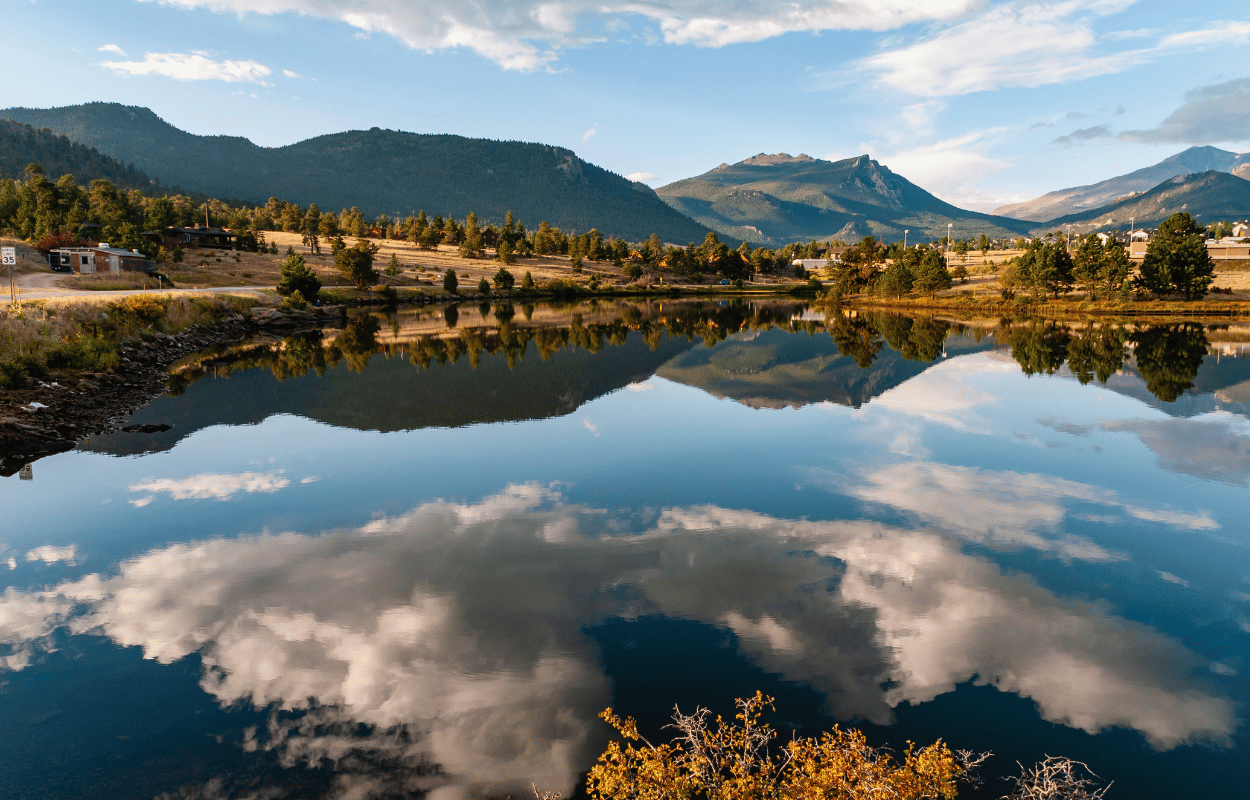
The question we hear most often is some version of: is there actually good fishing right there, or do you have to drive for it? The answer, which still surprises people, is that some of the best water we fish is within five minutes of our shop door.
The Big Thompson River starts high in Rocky Mountain National Park’s Forest Canyon, flows through the meadows of Moraine Park, and feeds into Lake Estes before dropping into the Big Thompson Canyon along Highway 34. That lower canyon stretch, nine miles of catch-and-release, artificial-only tailwater below the dam, is the section we fish hardest in March and April when the water is gin-clear, the fish are stacked, and we have the canyon almost entirely to ourselves. Most people are still waiting for summer. That is their loss.
From the guides: The lower Big Thompson is at its absolute best from late February through April. Cold, low, clear water. Big fish sitting in predictable lies. Almost no one else out there. If you can get to Estes Park in early spring, skip the expensive summer weeks and come then. We will take you somewhere most guides never mention to their summer clients.
What separates Estes Park from the other two is not just one good piece of water. It is the range. On a single day, a guided angler can fish the tailwater canyon in the morning, drive 20 minutes into Rocky Mountain National Park after lunch, and be standing in an alpine meadow watching native cutthroat rise to a PMD hatch by 3pm. Try doing that from a Vail resort.
The National Park Side
Beyond the Big Thompson, Rocky Mountain National Park holds brook, brown, rainbow, and native Greenback Cutthroat Trout in streams and alpine lakes that most visiting anglers never find. Wild Basin, the North St. Vrain drainage, Moraine Park’s side channels, and dozens of alpine lakes all hold fish that have never seen a guide’s fly box. This is where our backcountry and backpacking trips(opens in new tab) go, and it is consistently where our clients have the most memorable days.
For a detailed breakdown of the river’s two distinct personalities, the park meadow water versus the canyon tailwater, see our Big Thompson River Fly Fishing: An Angler’s Guide(opens in new tab).
From the guides: Here is what we tell serious anglers who think they have already seen Rocky Mountain National Park: most visitors fish the same three or four accessible spots near the road. The best water in the park is a mile or two further on foot, and it fishes like a completely different river. We know which drainages to target by month and where the Greenback Cutthroat populations are healthiest. That knowledge takes years to build.
One Planning Note
Rocky Mountain National Park requires a timed-entry reservation to enter certain corridors between 9am and 2pm from May 22 through mid-October 2026. It is manageable with a little planning, and visitors on a guided trip are exempt from the requirement, which is one less thing to handle on a fishing day. Anglers fishing the Big Thompson canyon, Lake Estes, or Fall River need neither reservation nor timed-entry permit.
Kirks Flyshop runs guided fly fishing trips(opens in new tab) on the Big Thompson, arranges access to private water(opens in new tab) for anglers who want zero competition on their runs, and offers Lake Estes fishing charters(opens in new tab) for a lower-key morning on the water. First-timers can book fly fishing lessons(opens in new tab) before heading out. Check our current fishing report(opens in new tab) before any trip to see exactly what is happening on the water that week.
Vail: Good Water, Honest Trade-offs
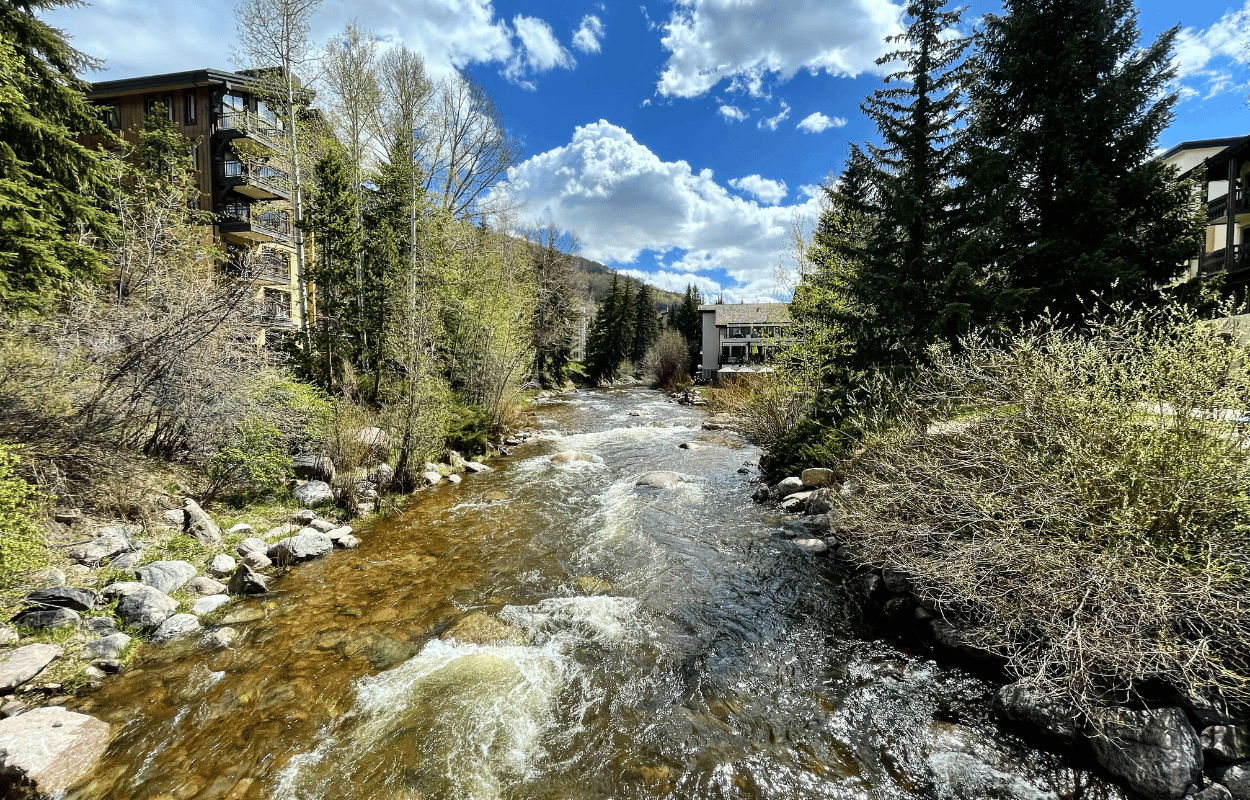
Gore Creek’s Gold Medal designation is real. A four-to-six mile stretch running from the confluence with Red Sandstone Creek through the resort core carries legitimate trophy-trout water within walking distance of Vail Village. That is genuinely convenient if you are staying there or splitting the day between fishing and other activities.
From the guides: Gore Creek is legitimately good water. It also might be the only Gold Medal fishery in Colorado where you can hear semis downshifting on I-70 while you are landing a 20-inch brown. That is not a dealbreaker for everyone. But it is worth knowing before you plan a dedicated fishing trip around it.
The regulations on the Gold Medal stretch are strict: artificial flies and lures only, two-fish limit at 16 inches or larger. Those rules keep the fishery healthy but they also mean this water rewards anglers who know it. Showing up cold with a week of vacation and no local knowledge is not the move.
The other honest limitation is extension. When Estes Park anglers want more variety they drive five minutes into a national park. When Vail anglers want more variety they get in the car and drive to the Eagle River or further. The backcountry depth simply is not there at the same radius.
For anglers whose trip includes resort dining, skiing, or activities beyond fishing, Vail makes a lot of sense as a base. For anglers whose trip is built around fly fishing first, the I-70 corridor becomes a real factor before the end of the first day.
Breckenridge: Great Base, Wrong Expectations
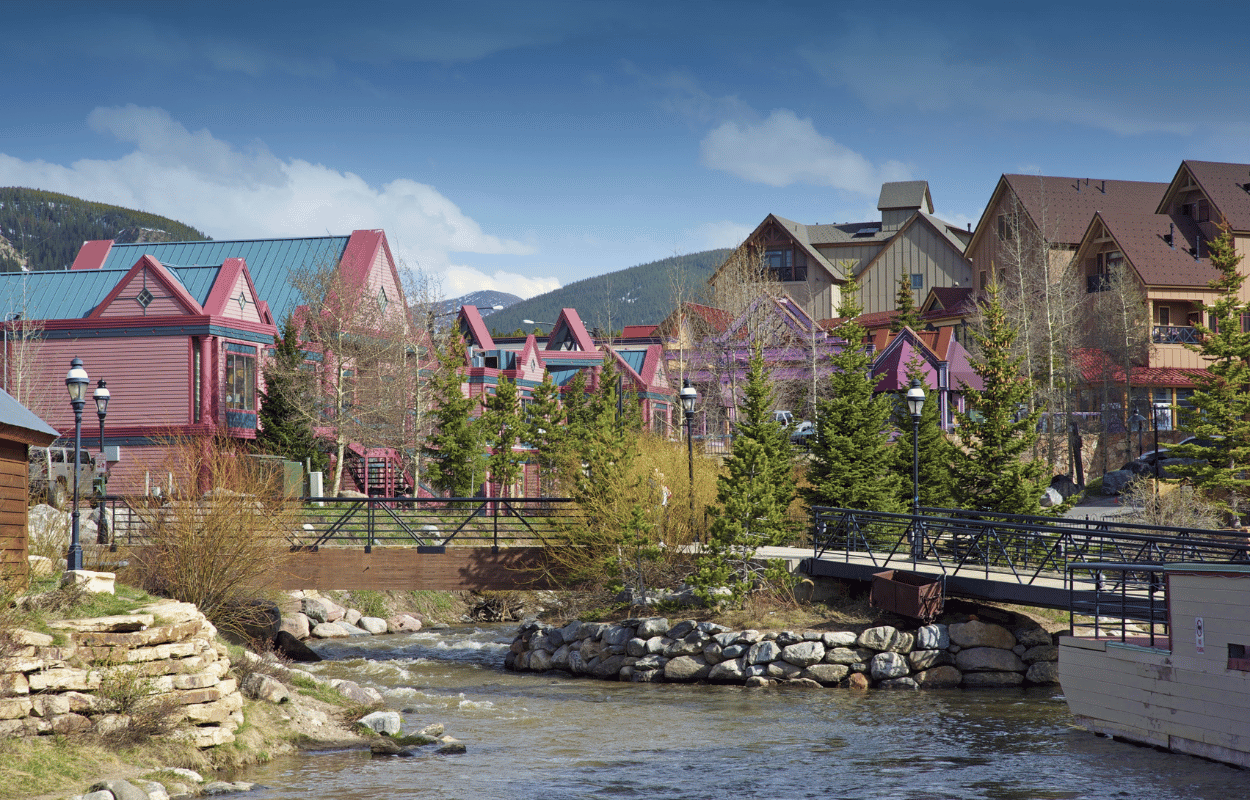
We have had guests drive from Denver to Breckenridge specifically to fish the Blue River and call us from a parking lot asking where the good water is. The answer is always: keep driving toward Silverthorne.
The Blue River flows north out of Hoosier Pass, through town, and into Dillon Reservoir. After Colorado Parks and Wildlife delisted roughly 19 miles of the upper Blue in 2016 due to degraded habitat and unnatural stream flows, the Gold Medal designation now covers about 15 miles below the Dillon Reservoir dam, a tailwater starting near Silverthorne, several miles from Breckenridge itself. Restoration work on the upper river is ongoing, but right now, the fishing people come to Breckenridge for is not actually in Breckenridge.
From the guides: The Blue River tailwater near Silverthorne is excellent water. We mean that. Big rainbows, consistent midge and mysis shrimp fishing, year-round access below the dam. The problem is not the river. The problem is that most people show up to Breckenridge expecting it to be right outside their rental. It is not. That drive feels short on a map and longer after a full day on the mountain.
The water that does run through town is developed and heavily pressured during peak summer months, particularly near public access points close to the reservoir. Breckenridge works well as the anchor for a broader Summit County trip that includes the Blue tailwater, the Snake River, and Dillon Reservoir. As a stand-alone walk-out-your-door fishery, it does not compare to what Estes Park or even Vail offer within town limits.
Head-to-Head: What Actually Matters
Water Variety
Estes Park is not close on this one. A stocked lake, an in-town freestone river, a catch-and-release tailwater canyon, and an entire national park’s worth of backcountry streams and alpine lakes, all within 20 minutes of town. Vail and Breckenridge each give you one river and a drive to get to anything else.
Access and Crowds
Vail’s Gold Medal water is the most convenient to reach on foot, and it shows: it is also the most crowded and the noisiest. Breckenridge’s best water is a drive away by definition. The Big Thompson canyon and in-town water around Estes Park need no reservation, and the park sections are manageable, or irrelevant if you are on a guided trip.
Season Length
This one is not a competition. The Big Thompson tailwater below Lake Estes fishes well into winter. We have guided productive days there in January. Gore Creek and the Blue River taper off as summer ends and are essentially done by October. For a shoulder-season trip, Estes Park is the only answer of the three.
Beginners and Families
Lake Estes and the lower Big Thompson are the most forgiving starting points of the three. We offer fly fishing lessons(opens in new tab) locally, the water is accessible without technical skill, and catch rates for guided beginner trips are consistently high. Gore Creek and the Blue River tailwater both fish on artificial-only regulations and reward experience more than enthusiasm.
For the Serious Angler Who Has Fished Colorado Before
Rocky Mountain National Park’s backcountry is the answer. The alpine lakes and high-elevation streams that our backcountry trips(opens in new tab) access hold wild Greenback Cutthroat in places that see minimal pressure. That is the fishing Vail and Breckenridge simply cannot offer within any reasonable radius.
The Verdict
For most anglers planning a dedicated fly fishing trip to Colorado, Estes Park is the answer. We have guided here for over 20 years and we still find water that surprises us. The combination of a year-round tailwater, accessible in-town fishing, and an entire national park’s worth of backcountry is genuinely hard to replicate anywhere else in the state at the same radius from a real town.
Vail is a strong choice if convenience and walkability matter more than solitude, or if the trip is built around resort activities with fishing as one component. The Gold Medal water is real. Just go in knowing the trade-offs.
Breckenridge makes the most sense as a base for a Summit County trip that includes multiple waters: the Blue tailwater near Silverthorne, Dillon Reservoir, the Snake River. As a stand-alone fly fishing destination, it is the weakest of the three.
The last thing we will say: check the fishing report(opens in new tab) before you go anywhere. Conditions change week to week, and 20 years of experience means knowing when to switch plans, not just where to start them. We update ours regularly and it is free.
For more of Colorado’s best water, see our guide to 12 Places to Fly Fish in Colorado(opens in new tab).
Ready to Fish Estes Park With a Guide Who Knows It?
Twenty years on the Big Thompson means we know which runs hold the biggest fish in March, which alpine lakes are worth the hike, and which sections of private water to keep in our back pocket. Here is how to book:
✓ Guided Fly Fishing Trips: Big Thompson River, RMNP streams, all skill levels
✓ Lake Estes Fishing Charters: Low-key morning on the water, all gear included
✓ Private Water Access: No crowds, no competition for runs
✓ Fly Fishing Lessons: First-timer to refresher, we meet you where you are
✓ Backcountry and Backpacking Trips: RMNP’s less-fished water, overnight adventures
✓ Current Fishing Report: Updated weekly by our guides
Frequently Asked Questions
Which Colorado town has the best fly fishing: Estes Park, Vail, or Breckenridge?
Estes Park offers the most complete fly fishing experience of the three. It combines a year-round tailwater on the Big Thompson River below Lake Estes with in-town freestone water and backcountry access to Rocky Mountain National Park’s streams and alpine lakes. Vail has more convenient Gold Medal water on Gore Creek, though it runs alongside I-70. Breckenridge’s best water is downstream near Silverthorne. For dedicated fishing trips, Estes Park is the strongest choice.
Is Gore Creek in Vail actually Gold Medal water?
Yes. A four-to-six-mile stretch of Gore Creek through Vail carries an official Gold Medal designation from Colorado Parks and Wildlife, with artificial-flies-and-lures-only regulations and a two-fish limit at 16 inches or larger. The Gold Medal stretch runs parallel to I-70 through the resort core.
Does the Blue River in Breckenridge have Gold Medal status?
Not in town. The Blue River’s Gold Medal stretch is approximately 15 miles of tailwater below the Dillon Reservoir dam, starting near Silverthorne and several miles from Breckenridge itself. A section of the upper Blue lost its Gold Medal designation in 2016 due to habitat degradation, though restoration efforts are underway.
Do I need a permit to fish inside Rocky Mountain National Park?
A standard Colorado fishing license is required for all anglers 16 and older. From May 22 through mid-October 2026, a timed-entry reservation is also required to enter certain park corridors between set hours. Visitors on a guided trip are exempt from the timed-entry requirement. Anglers fishing the Big Thompson canyon or Lake Estes outside the park need no reservation.
When is the best time to fly fish near Estes Park?
The lower Big Thompson tailwater is at its best from late February through April: clear water, concentrated fish, and minimal pressure. Rocky Mountain National Park streams and alpine lakes fish best from late June through September. Fall brings fewer crowds and aggressive pre-spawn brown trout. Unlike Vail and Breckenridge, Estes Park offers fishable water year-round.
Can beginners fly fish in Estes Park?
Yes, and it is one of the better spots in Colorado to start. Lake Estes and the lower Big Thompson offer accessible water with high catch rates for guided anglers. Kirks Flyshop offers fly fishing lessons for all skill levels. All gear is provided and every trip carries a fish guarantee.
How do I book a guided fly fishing trip near Estes Park?
Kirks Flyshop offers guided fly fishing trips on the Big Thompson River and Rocky Mountain National Park, Lake Estes charters, private water access, fly fishing lessons, and backcountry overnight trips. Book at kirksflyshop.com/guided-fly-fishing or call (970) 577-0790. All gear is provided and trips carry a fish guarantee.