
Spring Fly Fishing in Estes Park: Early Season Success on the Big Thompson
Spring fly fishing on the Big Thompson River near Estes Park offers some of the year’s best technical trout fishing. Low, clear flows, active midges and small mayflies, and reduced angling pressure create excellent conditions before peak runoff arrives. Success often depends on small flies, light tippet, and stealthy presentations.
While fly fishing in Rocky Mountain National Park is possible, early-season conditions keep much of our attention on the Lower Big Thompson River below Lake Estes. Its stable tailwater flows, clear water, and active trout make it the most reliable spring fishery in the Estes Valley.
If you’re planning a trip, the following insights will help you fish more effectively, and if you want to shorten the learning curve, our team at Kirks Flyshop is here to help with local knowledge, gear, and guided trips.
👉 Explore our Colorado fishing trips to experience the Big Thompson at its best.
Spring Conditions on the Big Thompson River
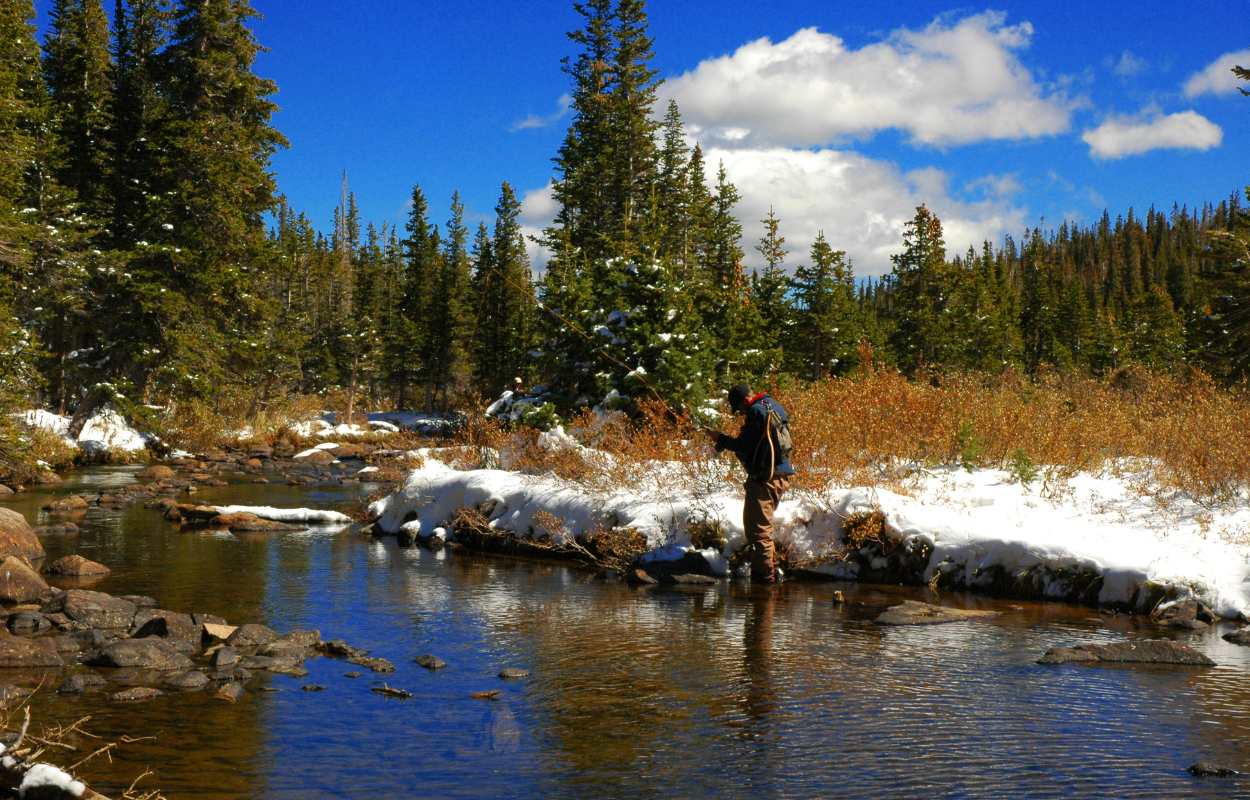
Early spring on the Big Thompson offers unique conditions that reward careful presentation and thoughtful fly selection.
-
Flows typically range between 75–200 CFS before runoff
-
Water clarity is excellent, making stealth essential
-
Trout often hold in slower seams, tailouts, and shallow runs
-
Midges and small mayflies dominate the food supply
-
Fishing remains strong until peak runoff begins (typically May–June)
Because the river is clear and shallow, trout are easily spooked. Light tippet, small flies, and subtle presentations are key to success.
For current flows and conditions, check our latest Estes Park fishing report.
Keep It Small: Matching Spring Food Sources
March and April bring low flows and clear water, making small nymphs extremely effective.
The Sparkle Wing RS2 remains a year-round staple and is especially effective during spring. Pair it with a size 18 zebra midge in a double nymph rig for consistent results when flows hover around 100–150 CFS.
Recommended setup:
- Zebra Midge (#18–20)
- RS2 (#18–22)
- 6X–7X fluorocarbon tippet
- Long leader for stealth presentation
In clear water, trout are wary. Downsizing flies and tippet dramatically improves your success rate.
Need flies or help building a rig? Stop by our Estes Park fly shop or browse gear options before your trip.
Use Smaller Strike Indicators for Stealth
Spring flows often place trout in just 1–2 feet of water. Large indicators can splash and spook fish before your flies reach the strike zone. Instead, consider using a New Zealand strike indicator, available at our Estes Park fly shop, for a subtler presentation.
Other strike indicators we like include Airlock Strike Indicators, Oros Strike Indicators, and Thingamabobbers.
Explore Beyond The Tailwater
As winter transitions into spring, more sections of the Big Thompson Canyon open up.
While the tailwater below Lake Estes Dam remains most consistent early in the season, warming temperatures expand opportunities:
-
Canyon stretches fish well on warmer afternoons
-
Trout move into soft seams and slower edges
-
Newly thawed lake margins attract feeding fish
-
Sections from the golf course to the Dam Store can produce larger trout
As ice recedes on Lake Estes, focus on warming shoreline areas where trout search for early-season food sources. For anglers looking for less pressure and more consistent access, consider our Colorado private water fly fishing trips.
Best Time of Day for Spring Fishing
Water temperature plays a major role in early-season trout activity.
Most productive window:
-
10:00 AM – 3:00 PM
-
Fish become more active as water warms
-
Sunny days trigger midge and BWO activity
-
Overcast conditions can improve dry fly opportunities
Early mornings tend to be slower until the sun reaches the water.
Spring Fly Fishing Tips for Success
Spring fishing rewards patience, stealth, and attention to detail.
Kirks guide tips:
- Use 5X–7X tippet for clear water conditions
- Fish slower seams, tailouts, and shallow runs
- Downsize flies and indicators
- Dress in layers for changing temperatures
- Watch for subtle takes in shallow water
- Polarized sunglasses help spot fish
Traveling light? You can rent waders, boots, and rods directly from Kirks Flyshop.
Fish the Big Thompson This Spring
Spring offers some of the most technical and rewarding fly fishing in Estes Park. With clear water, active trout, and fewer anglers on the river, it’s an excellent time to refine your skills and enjoy a quieter experience.
If you want to learn the river faster and fish the most productive water, our guides are ready to help.
✔ Local experts on the Big Thompson River
✔ Beginner-friendly instruction
✔ Private water access available
✔ All gear provided
👉 Book a guided fly fishing trip or Colorado River float trip
👉 Try a relaxed, family-friendly experience with our Lake Estes fishing charters
👉 Visit our Estes Park fly shop for local advice
👉 Check the latest fishing report before you go
Spring conditions change quickly, getting local insight can make all the difference.
FAQs: Spring Fly Fishing Colorado
When does spring fly fishing start in Estes Park?
Spring fishing typically improves in March and April as water temperatures begin to rise and trout become more active. Conditions remain productive until peak spring runoff, which usually begins in May.
Why fish the Big Thompson River in spring?
The Big Thompson River offers stable tailwater flows, clear water, and active trout before runoff arrives. Lower angling pressure and consistent midge and mayfly activity make it one of the most reliable early-season fisheries near Estes Park.
What flies work best on the Big Thompson River in spring?
Small nymphs dominate early-season success. Top patterns include Zebra Midges, RS2s, Black Beauties, and Pheasant Tails in sizes 18–22. On warmer afternoons, Blue Wing Olive dries and Griffith’s Gnats can produce surface action.
What time of day is best for spring fishing?
Late morning through mid-afternoon is typically most productive. Trout activity increases as the sun warms the water, especially on sunny spring days.
What water conditions should I expect in early spring?
Expect low, clear flows and cold water temperatures. Trout often hold in slower seams, tailouts, and shallow runs, making stealth and light tippet essential.
Can beginners fish the Big Thompson River in spring?
Yes. Spring is a great time for beginners because trout are feeding actively and fishing pressure is low. Booking a guided trip can help you learn effective techniques quickly.
Is Rocky Mountain National Park fishable in spring?
Some lower-elevation waters become accessible as snow melts, but the tailwater below Lake Estes typically offers the most consistent early-season fishing conditions.
Should I book a guide for spring fishing?
A guide can help you locate productive water, choose the right flies, and adapt to changing spring conditions. Kirks Flyshop guides fish the Big Thompson daily and provide gear, instruction, and local insight.
Where can I check current conditions before fishing?
Always check the latest flows and conditions before heading out. Our updated Estes Park fishing report provides current river updates and fly recommendations.